How can we turn today’s environmental and agricultural challenges into tomorrow’s research and innovation projects? Bringing together the right expertise and building strong partnerships is an important first step.
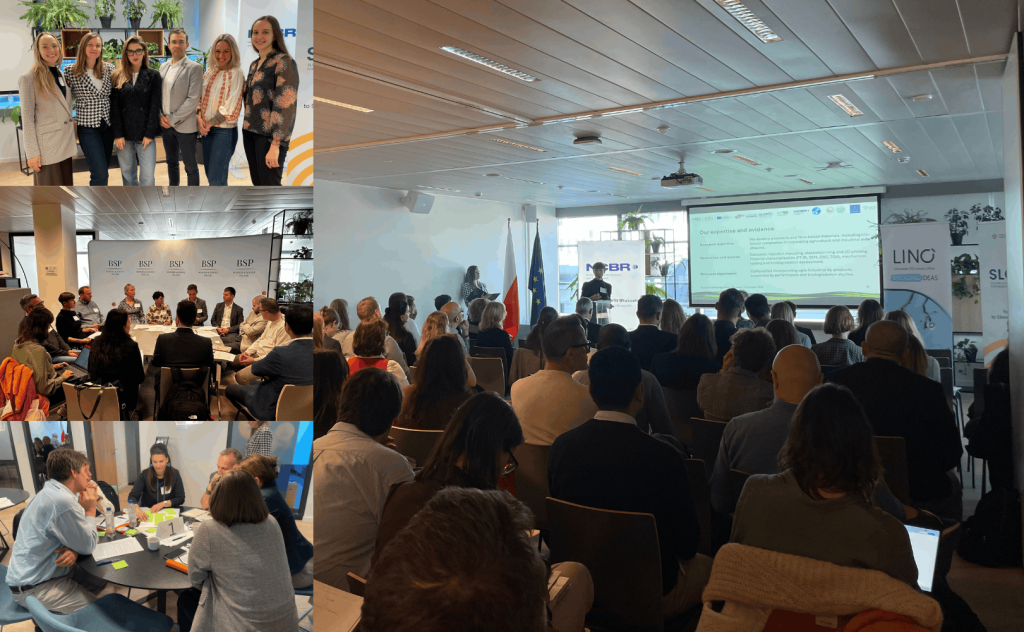
With this goal in mind, the Horizon Europe Cluster 6 Brokerage Event: Partnering for Nature, Agriculture and Resilience brought together 80 participants in Brussels to exchange ideas, explore upcoming funding opportunities, and connect with potential partners for future Horizon Europe projects.
The event attracted a diverse audience, including representatives from research institutions, public authorities, businesses, non-governmental and other organisations. This broad participation reflected the growing interest in Cluster 6 ”Food, Bioeconomy, Natural Resources, Agriculture and Environment” and the importance of cooperation across different sectors.
The discussions covered a wide range of topics addressing today’s environmental and agricultural challenges, from biodiversity protection and living labs to organic crop breeding, more efficient biomass use, reducing agricultural pollution, and innovation in agriculture. The diversity of interests and expertise demonstrated how relevant these topics are and how much potential they offer for future collaboration.
What’s Ahead for Horizon Europe Cluster 6?
The day began with insights into upcoming funding opportunities. Marco Citelli from the European Commission presented the Horizon Europe Cluster 6 Work Programme 2026–2027, outlining its main priorities and important changes for applicants. One of the key messages was the move towards a simpler and more flexible programme. The upcoming Work Programme introduces fewer but larger topics, wider use of lump-sum funding, shorter proposal templates and more open topics that give applicants greater flexibility to propose innovative solutions.
At the same time, several important priorities remain at the heart of Cluster 6. Biodiversity continues to be a major focus, while international cooperation, the multi-actor approach and the integration of Social Sciences and Humanities (SSH) remain essential elements of many calls. Greater attention is also being given to economic security and strategic autonomy.
These insights gave participants a clearer picture of upcoming opportunities and helped them consider how their expertise and ideas could contribute to future projects.
What Makes a Competitive Horizon Europe Proposal?
Understanding funding opportunities is only part of the process. Developing a strong proposal is equally important. Piotr Michałowski offered participants a valuable perspective from the evaluator’s side, sharing practical advice on how to prepare convincing and competitive Horizon Europe proposals. His key message focused on the 5 Cs: Coherence, Consequence, Concrete Information, Clarity, and Community- five principles to keep in mind when developing a proposal that is well-structured, clearly communicated, and demonstrates its potential impact.
More Than 20 Pitches and Plenty of Ideas
The event was not only about listening and learning. Participants also had the opportunity to take the stage and share their own expertise, project ideas and collaboration interests.
More than 20 participants delivered short, dynamic pitches, introducing a wide range of ideas and highlighting the expertise they could bring to future Horizon Europe projects. The pitching session created an opportunity to discover shared interests, identify complementary skills and spark conversations that could lead to new partnerships.
Turning Connections into Future Collaborations
Building on the ideas and contacts made throughout the day, the event concluded with an interactive consortium-building workshop.
Participants worked together to explore potential project concepts, discuss common interests, and identify possible partners for upcoming Cluster 6 calls. The workshop provided space to move beyond initial introductions and take the first steps towards developing future project consortia. The strong engagement throughout the event showed the value of bringing together people from different sectors who share an ambition to tackle common challenges through research and innovation.
A big thank you to all speakers, participants, and co-organisers who contributed to making the event an engaging and productive meeting point for the Cluster 6 community.
Event co-organisers:
- Lithuanian RDI liaison office (LINO)and NCPs at the Research Council of Lithuania
- University of Pannonia, Hungary
- Hungarian University of agriculture and life sciences (MATE)
- Slovak Liaison Office for Research and Development in Brussels (SLORD)
- The National Centre for Research and Development Poland (NCBR)
- Euro Atlantic Diplomacy Society, Romania (EADS)
- University of Zagreb Faculty of Agriculture, Croatia (FAZ)


